




Cyber awareness for growing businesses juggling risk, speed, and reality
A founder is trying to get a new starter productive before the first customer call of the day.
The request looks straightforward. The person has joined the business, the role is agreed, and they need access to shared folders, project tools, the CRM, client documents and the platforms the rest of the team already uses. Someone from the team is waiting to hand work over. A client question needs answering. The founder is also watching the clock because the same morning includes sales follow-up, supplier messages and delivery work.
Granting access feels like the sensible decision. It helps the new person start properly, stops other people becoming the workaround, and keeps the business moving at the pace everyone expects.
Nothing about the request feels unusual. In a growing business, access often happens quickly because people are close to the work, roles overlap, and formal steps can feel bigger than the task itself. The founder is not ignoring cyber risk. They are trying to remove friction from a real working day.
The hidden risk sits in the reason the decision feels so reasonable. The person is real. The need is real. The work is waiting. But the route, the level of access, the systems involved and the check before approval still matter.
In that moment, it does not feel like a cybersecurity decision. It feels like business judgement: support the team, keep delivery moving and avoid turning a normal operational task into another delay.




Why SME risk often forms inside growth and momentum
In SMEs and startups, work often moves quickly because it has to. Customer requests, supplier messages, payments, onboarding, shared tools, client delivery, system access and internal communication often sit close together, handled by people who are already carrying more than one responsibility.
That is why cyber risk can be difficult to recognise in growing businesses. It does not always arrive separately from the work. It can appear inside an onboarding request, a supplier invoice, a customer message, a payment change, a shared folder invitation, a CRM update, a password reset or a platform prompt that seems connected to normal business activity.
The pressure is real. A new starter needs to contribute. A customer may be waiting. A supplier may need an answer. A founder may be moving between sales, delivery, finance and operations. A manager may be trying to stop one small decision from holding everyone else up. In that environment, quick judgement is not a bad habit. It is often how the business keeps functioning.
This is where SME and startup risk becomes specific. Agility is not just a nice idea. It is part of how growing businesses survive. When a request appears to support growth, delivery or customer work, pausing to verify can feel like adding friction to a business already working at pace.
That does not mean people are ignoring risk. They are responding to the conditions around them. They see a believable request, connected to a real person, client, supplier, tool or task, at a point where delay may affect delivery, confidence, income or team capacity.
The difficult part is that the same conditions that make small businesses flexible can also make questionable requests harder to challenge. An access request, invoice change, supplier instruction, client message, shared link, platform prompt or payment update does not need to look dramatic. It only needs to feel consistent with the person, the task, the system and the pace the business is already operating at.
Helping growing teams handle cyber decisions while work is moving
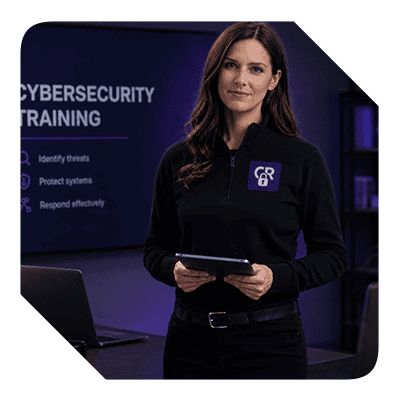
Cyber Rebels helps SMEs and startups work through the moments where an ordinary business decision can also create cyber risk. That might be giving a new starter access, confirming a change to supplier details, sharing a client file, responding to a customer request or approving a permission inside a platform the team uses every day.
During the training, participants examine what they are trying to achieve, what makes the request feel legitimate and where a proportionate check belongs. They can compare how different people might respond, practise confirming requests through a separate route and explore when uncertainty should be raised before the action goes any further.
The content is shaped around the business rather than delivered as a generic collection of cyber topics. A founder-led startup may need to explore what happens as access, payments and customer information begin moving beyond the original team. A growing SME may need situations involving finance, operations, managers, administrators, customer-facing staff and external suppliers. The systems, responsibilities and working relationships change which decisions matter and what a workable response looks like.
The point is not to make people wary of every request. It is to help them recognise that something can make complete sense in the context of the work and still need to be confirmed before they act.
What changes as responsibility spreads across the business
A growing business rarely replaces its informal ways of working all at once. New people join, systems are added and responsibilities move across the team, while many decisions still depend on familiar names, quick messages and processes that everyone assumes somebody else understands.
That flexibility often helps the business move. The difficulty comes when different people begin making their own reasonable assumptions about who can approve access, how payment changes are confirmed, where client information can be shared or when a request should be questioned.
One person may grant access because a colleague needs to start work. Another may follow a supplier instruction because it matches an expected invoice. Someone else may approve a platform request because delaying it would hold up a customer or project. None of those decisions has to feel reckless or unusual.
The pattern becomes harder to see because the immediate task is completed and attention moves elsewhere. Questions may not emerge until a supplier queries a payment, a client asks about data handling or someone reviews access that should have been removed months earlier.
By then, the issue is larger than whether one person noticed a warning sign. It is whether the business has given everyone a clear, usable way to check important decisions as responsibility moves beyond the people who originally held it.
Training shaped around how your growing business works
The training can reflect the roles, systems and relationships that shape decisions inside your business. That may include how founders hand over responsibility, how managers approve access, how finance teams confirm supplier changes, how administrators handle customer records or how delivery teams share information with clients and partners.
Participants work with situations that feel familiar enough to prompt an honest discussion. They can explore where people currently rely on trust or memory, which checks are realistic while work is live and what support someone needs when they are unsure but do not want to become the person holding everything up.
That discussion matters because a better decision needs more than a warning to “be careful”. People need to know what they can check, which route to use and what will happen when they raise a concern. Where ownership is unclear or a process depends on one person’s memory, the training can help make that visible so the business can strengthen the conditions around the team as well as their individual judgement.
The examples and level of discussion are planned around the organisation and the people attending. The training can therefore remain accessible to beginners and mixed-experience teams while still reflecting the decisions people are genuinely responsible for.
The intended shift is practical: checking becomes part of completing the work properly, rather than an extra task people are expected to remember after the moment has passed.


Explore training that fits how your growing business works
Start with the everyday points where trust, speed and access come together. Who is added to systems? How are supplier changes confirmed? How are client files shared? How are payment details checked? When something looks normal but still needs a second look, do people know when to pause and which route to use?
These questions are not about slowing the business down. They help show where the team already relies on judgement, where current checks are working well and where people may need clearer support when pressure makes the quickest response feel like the most sensible one.
For some SMEs, a focused session may be enough to make those moments easier to recognise. For others, a deeper workshop or tailored programme may be more useful, particularly where roles overlap, systems are multiplying and responsibility is spreading across the team.
You do not need to know which option you need yet. Our training services page explains the different ways Cyber Rebels can support your organisation, helping you explore the available routes and understand what each one offers before deciding where to begin.
Let’s Talk About Securing Your Small Business