




When a team decision feels routine to everyone involved
Sam is preparing a supplier payment run before the cut-off. The invoice is open, the supplier name is familiar, and the batch is almost ready to release.
A message arrives from a colleague.
“The supplier has just sent updated bank details. Can you change them before this goes?”
The timing fits. The supplier is already being paid. The colleague is someone Sam knows. Pausing now could hold up the batch, create extra work for the team and delay something that appears to belong inside the process already underway.
In that moment, the decision does not feel like cybersecurity.
It feels like keeping the payment run moving.
Sam is not trying to bypass controls or ignore guidance. The request makes sense because it sits inside a real task, under time pressure, with other people waiting for the work to continue. Changing the details feels practical because the situation appears to support it.
But this is rarely a one-person decision in practice.
Someone has received the supplier message. Someone understands the relationship. Someone approves the payment. Someone owns the process. Someone assumes the check has already happened because the request has reached this stage.
That is where team judgement matters.
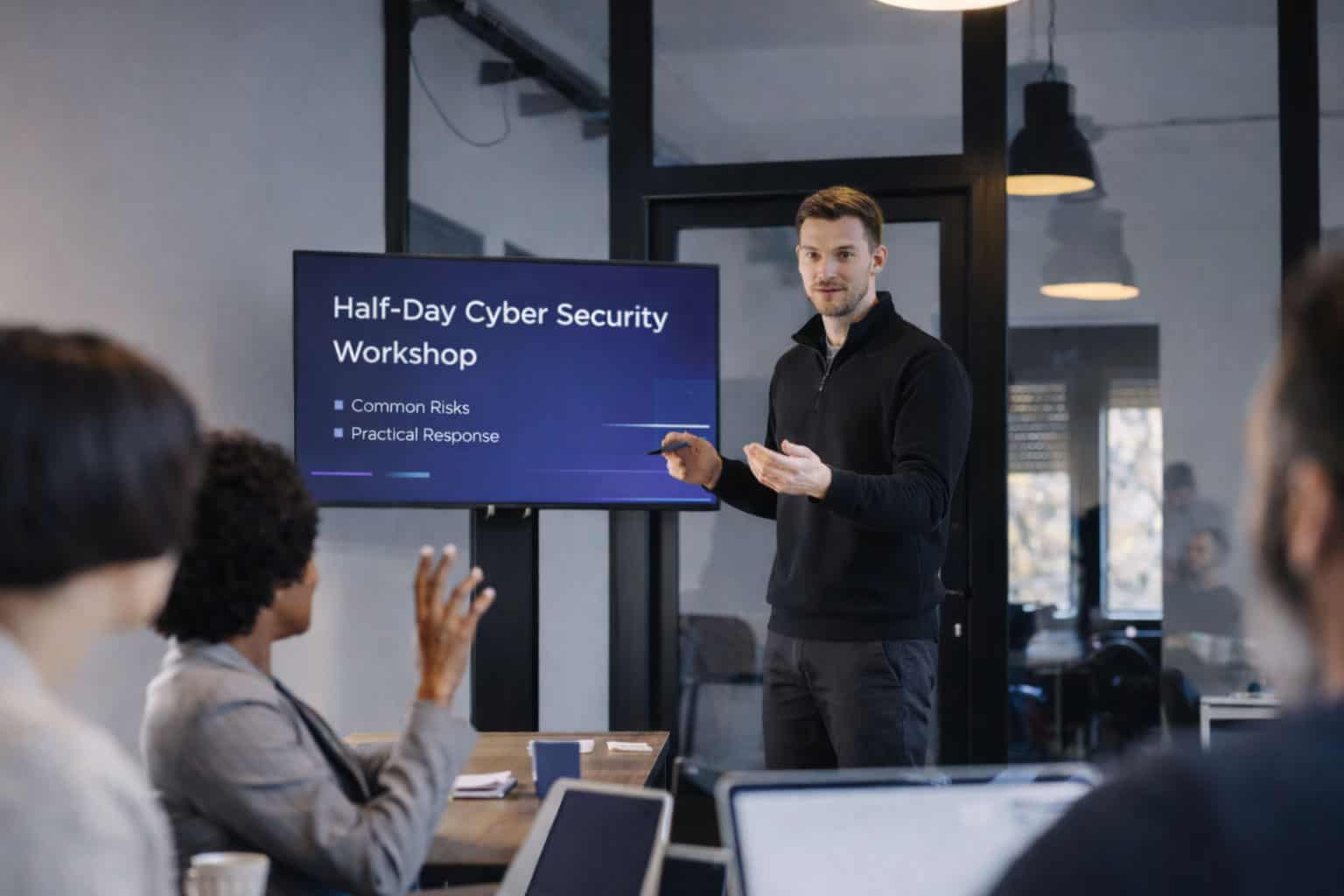
A short awareness session can help people notice moments like this sooner. The Half-Day Cybersecurity Workshop goes further. It gives teams time to slow the situation down, examine how the decision formed, and agree what a better response should look like when pressure, trust and workflow are all pulling the task forward.
This is the role of the workshop: not just recognising the moment, but examining the decision together.
Why awareness is not enough when decisions move between people
Most teams already know that payment changes, access requests, login prompts and unexpected file shares should be checked.
The challenge is not usually whether the rule exists. The challenge is what happens when the rule meets live work.
A payment run is moving. A customer is waiting. A colleague needs access. A manager wants the issue resolved quickly. A supplier conversation has already been going on for several days. The request does not arrive as a clean training example. It arrives inside a task that people are trying to complete.
That changes how the decision feels.
People read the situation through their role. Finance may focus on releasing the batch correctly. Operations may want the supplier issue resolved. A senior approver may assume the details have been checked before reaching them. Someone closer to the supplier may trust the relationship and see no reason to slow the process down.
None of those responses are careless.
They are shaped by responsibility, familiarity and the pressure to keep work moving.
This is where awareness often stops short. It can explain what people should do, but it may not give a team enough space to explore why the easier decision keeps making sense in practice. It may not show where assumptions appear, where ownership becomes unclear, or where people hesitate because they do not want to interrupt a process that appears to be working.
The Half-Day Cybersecurity Workshop fits that gap.
It gives people time to work through realistic situations together, compare how different roles interpret the same request, and build a more consistent response before the pressure is real.
How the workshop helps teams examine decisions together
The Half-Day Cybersecurity Workshop is a live, practical workshop for teams that need more than a quick awareness reset.
A Quick Cyber Awareness Session helps people notice ordinary moments where something that appears normal may still need checking. The half-day format gives a team more space to slow one of those situations down, compare how different people interpreted it and examine where responsibility or uncertainty moved as the work continued.
That extra time matters when a decision passes through several roles. One person may receive the request, another may understand the relationship, someone else may approve the action and a manager may assume the relevant checks have already happened. Each person can make a reasonable decision while nobody has a complete view of the process.
The workshop gives the team time to explore what each person knew, what they assumed and where a practical check should sit. The discussion can move beyond simply reminding people to verify a request and into questions such as who owns the check, which route should be used and how someone can raise uncertainty without unnecessarily blocking the work.
The delivery is planned around the organisation, audience and priorities. The examples and level of discussion can reflect the roles, systems and decisions the team already handles, along with any particular situations or requirements agreed beforehand.
This service sits between the Quick Cyber Awareness Session and the Full-Day Cybersecurity Training Programme. The Quick Session creates early recognition. The Half-Day Workshop allows a team to examine decisions together. The Full-Day Programme provides more time for repeated practice across roles, handovers, systems and more complex decision points. A Tailored Programme is more appropriate where the organisation needs training built extensively around its own workflows and operating conditions.
For teams that need more than awareness but do not yet need a full-day programme, the half-day workshop provides a practical middle ground.

What happens during the workshop
The workshop is delivered live online or on-site and combines discussion, questions and realistic workplace scenarios rather than relying on a one-way presentation. It is suitable for complete beginners and mixed-experience teams, with no technical knowledge required.
Beforehand, we agree the audience, priorities and relevant working context. You can also let us know about particular requirements, examples or situations you would like reflected in the workshop. The delivery is then shaped around the organisation, the participants and the level of discussion that will be most useful for the group.
Participants work through situations where a task is already moving and something appears that fits naturally within it. That might involve changed supplier bank details during a payment run, an access request before a deadline, a customer-data query, a document shared through a familiar channel or an instruction that appears to come from someone with authority.
The purpose is not to catch people out or test whether they remember a rule. The group examines what the person was trying to complete, what made the request appear legitimate and how responsibility, familiarity, workload or time pressure shaped the decision.
The half-day format allows the team to look beyond the first response. Participants can compare how different roles interpret the same situation, identify where assumptions enter the process and explore what happens as responsibility passes from one person to another.
A finance colleague may believe the supplier relationship has already been confirmed. An approver may assume the bank details were checked earlier. Someone closer to the supplier may focus on resolving the issue before the payment cut-off. Each person sees a reasonable part of the process while nobody has a clear view of the complete decision.
Working through those perspectives gives the team space to consider where verification should happen, who should own the pause and what would make questioning or escalation realistic while the work is still moving.
The workshop is structured around the Cyber Rebels Five-Domain Model, covering contextual risk recognition, verification and control discipline, secure operational behaviour, incident judgement and escalation, and professional cyber judgement. The model gives the workshop direction without turning it into a technical lecture.
Cyber Rebels is a CPD Approved Provider, and participants receive an appropriate certificate following completion.
Who this workshop is for
The Half-Day Cybersecurity Workshop is designed for organisations that need more than a basic awareness session but do not yet require the depth of a full-day or tailored programme.
It works particularly well where people already understand that cyber risk matters but may interpret the same request differently during live work. That may include finance, administration, operations, customer-facing and management teams, as well as mixed-role groups where access, payments, files, customer information or approvals move between several people.
The workshop is especially useful where guidance already exists but the organisation is unsure how consistently it is being applied. One person may see a request as routine. Another may notice something unusual but stay quiet because the task is already moving. A manager may assume an earlier check has taken place, while someone closer to the client or supplier may rely on the existing relationship.
These differences are not evidence that people do not care about cybersecurity. They reflect the different information, responsibilities and pressures attached to each role. The half-day format gives the group enough time to compare those interpretations and explore where a clearer check, shared expectation or escalation route may be useful.
The workshop is suitable for complete beginners and mixed-experience teams because the discussion begins with recognisable work rather than technical knowledge.
A Quick Cyber Awareness Session may be enough where the main need is to help people notice these moments sooner. Full-Day or Tailored Training may fit better where the organisation needs repeated practice across several roles, handovers, systems or organisation-specific workflows.
What happens when team decisions go unexamined
When teams do not have an opportunity to examine these decisions together, different assumptions can quietly become part of the workflow.
One person continues because the request arrived through a familiar route. Another assumes someone earlier in the process has already checked it. A colleague notices something uncertain but stays quiet because the task is moving and several people are waiting for it to continue.
Each response may feel sensible from that person’s position. The exposure appears when those assumptions connect and nobody owns the complete decision.
A payment change may progress because the supplier is known. Access may be approved because the request appears necessary. A shared document may be opened because it arrived through the channel the team normally uses. Nothing has to go wrong immediately for those responses to become familiar and repeatable.
Over time, a gap can form between the process the organisation believes is being followed and the route live work makes easiest. Written guidance may be clear while decisions still depend on informal trust, unclear ownership or whether someone feels able to interrupt the task.
A workshop cannot repair an unusable process, unclear authority or a checking route that does not fit the work. It can give the team space to examine where checks are being assumed, where interpretations differ and where the safer response may need clearer ownership or a more practical route.
That can give the organisation a clearer basis for deciding what belongs with participant judgement and what needs attention in the surrounding process, expectations or tools.
A practical space to examine decisions without blame
The Half-Day Cybersecurity Workshop avoids fear-based messaging, exaggerated scenarios and language that treats people as the problem.
When someone expects to be criticised for trusting a familiar request, using a shortcut or allowing a task to continue, they are less likely to explain why that response felt necessary. The organisation sees the action but misses the workload, process, expectation or uncertainty that shaped it.
The workshop begins with the work itself.
What was the person trying to complete? What made the request appear legitimate? Why did continuing feel helpful? Where did responsibility become unclear? What would have made a better response easier to take?
These questions allow the team to examine the decision honestly without removing responsibility for what happens next.
Sometimes the useful change sits with the individual: noticing the moment sooner, verifying through a separate route or raising uncertainty before continuing. Sometimes the discussion exposes something around them: conflicting priorities, an awkward checking process, blurred ownership or a team that has not been given clear permission to pause.
The aim is not suspicion, panic or perfect decision-making. It is to give the team space to explore steadier judgement, clearer expectations and more workable responses while the work is still underway.
See where decisions begin to vary across your team
The Half-Day Cybersecurity Workshop is designed for organisations that need more than a short awareness session but do not yet need the depth of a full-day or tailored programme.
It gives teams time to examine how the same situation can be interpreted differently across roles, where assumptions enter a process and why responsibility can become unclear as work moves between people.
That matters because a team can understand the guidance and still respond differently during live work. Workload, familiarity, authority and previous experience all affect how a request feels in the moment. The workshop gives people space to compare those interpretations and consider what a practical shared response should look like.
For some organisations, a half-day workshop may provide the right level of depth to examine shared language, verification and escalation together. For others, the discussion may reveal repeated decision points across several roles, handovers or workflows that need fuller examination through a Full-Day or Tailored Programme.
The free Cybersecurity Risk Check takes around two minutes and can help bring those decision points into view. Your answers can help you judge whether the Half-Day Workshop is the right next step or whether a different level of support would fit your team more closely.
