




If you want to understand online influence, don’t start with the extreme cases. Start with something ordinary.
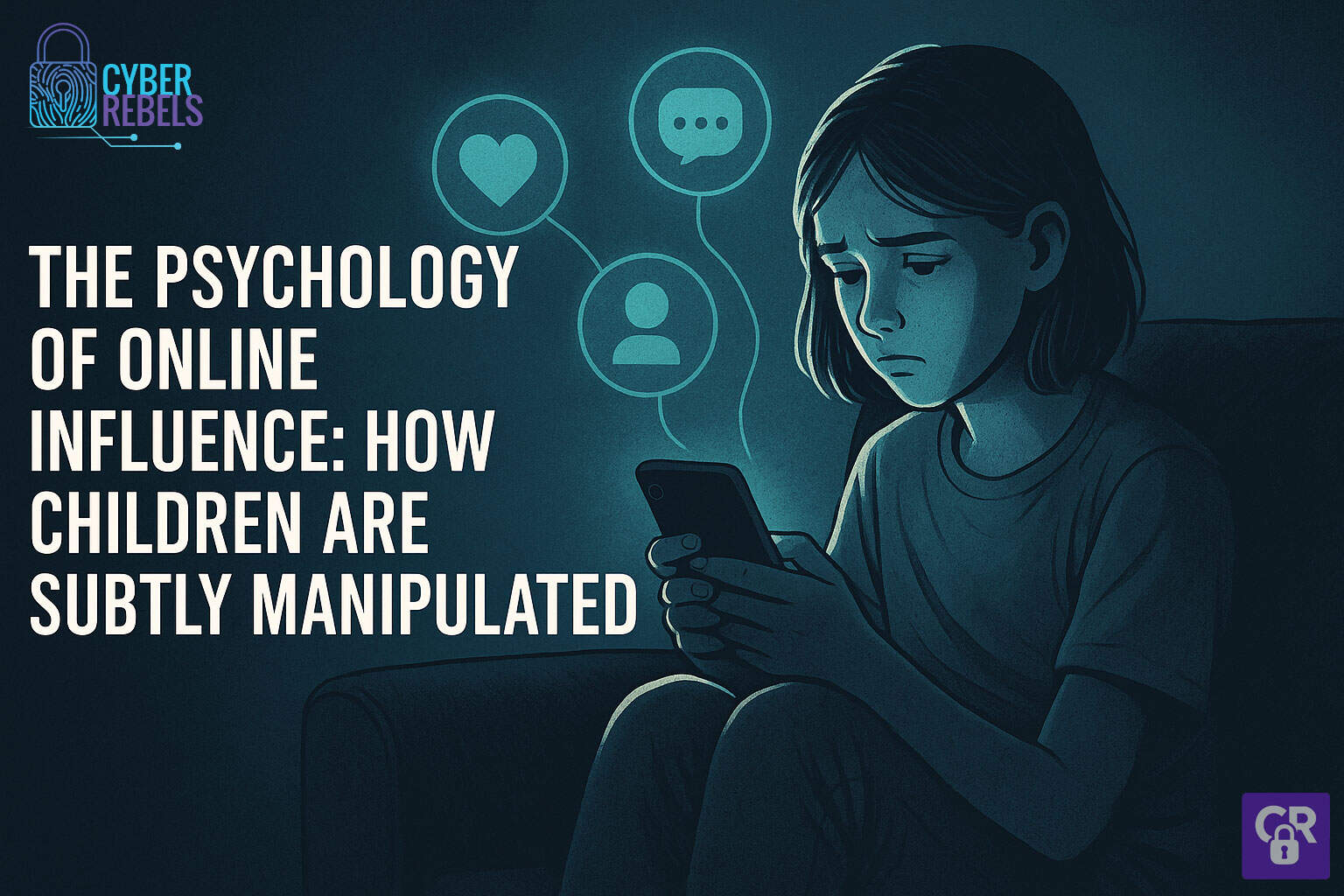
A child sits curled at one end of the sofa, drifting through their feed with the absent-minded ease that comes from habit and comfort. The room is quiet except for the faint chime of a notification. They scroll. Another clip. Another voice. Another moment of recognition from someone they’ve never met and never will. Nothing dramatic happens. Nothing obviously harmful appears. It looks like downtime — the kind adults are relieved to see after a demanding day.
But influence does its work quietly.
It settles into the small spaces — the pauses, the expressions, the moments no one thinks to question.
By the time a noticeable shift appears, something deeper has already taken root.
We often talk about safeguarding as though danger arrives suddenly — a predatory message, a harmful challenge, explicit content, a frightening interaction. But long before these scenarios occur, a child’s thinking, emotions and behaviour have already been shaped by forces they don’t recognise and adults rarely see. What happens early is subtle, and precisely because it is subtle, it is easy to miss.
If we want to protect young people, we must pay attention not just to risk, but to the early signs of influence — the places where it begins.
The Digital Environment Is Designed to Shape Behaviour
Most adults assume children browse content online the way they browse a bookshelf: choosing what they want, skipping what they don’t. But the digital world doesn’t behave like a shelf. It behaves like a responsive system — constantly monitoring, learning and adapting to even the smallest cues. A pause, a replay, a momentary expression… every micro-reaction becomes data. Within minutes, the platform understands what draws a child’s attention, often before the child forms any conscious preference.
And that is where shaping begins.
A moment of hesitation on a particular theme prompts the platform to offer more. Curiosity becomes familiarity. Familiarity becomes preference. What feels like choice is often a feedback loop — a child reacting to what the system has already decided to show them.
Emotion plays an even larger role. Digital platforms prioritise emotional intensity because it keeps people watching. Content that triggers amusement, outrage, envy, validation or sadness rises to the top of the feed. Gradually, children begin expecting this intensity everywhere — in friendships, at school, even in their internal emotional world. Regulation shifts quietly. What feels “normal” starts to mirror the emotional patterns they’ve rehearsed online.
Popularity adds another layer. When a video is labelled “trending” or “liked by millions,” it carries social weight. Popularity becomes a shortcut for credibility. If everyone cares, it must matter; if everyone behaves a certain way, that must be normal. Without realising it, children begin learning what they should value through the lens of what is widely seen.
Identity is shaped the same way. Online spaces present ready-made identities: aesthetics, humour styles, worldviews, communities. Children don’t need to seek them — they arrive pre-packaged. One clip at a time, these identities begin to feel familiar, then comfortable, then essential. A once-confident child may become self-critical. A gentle child may adopt the harsh tone rewarded in certain corners of the internet. These aren’t deliberate transformations. They’re gradual alignments.
Reward systems reinforce all of this. Likes, comments, streaks and shares offer dopamine rewards that strengthen whatever behaviours earned them. Exaggeration is rewarded. Oversharing is rewarded. Mimicking popular tropes is rewarded. Children quickly learn what “works,” not because they intend to be performative, but because the system teaches them which behaviours draw attention.
Finally, frictionless design removes natural stopping points. Infinite scroll means there is no end. Autoplay means there is no pause. Recommendations appear before curiosity even forms. A child isn’t choosing to keep going; the system is choosing for them.
Individually, these mechanisms are subtle. Together, they shape a child’s sense of what is important, normal and true — long before anything overtly harmful appears.
How Influence Takes Hold Without Being Detected
The earliest signs of influence rarely look concerning. A child becomes a little quieter after scrolling. They respond with slightly less patience. They lean into their device when they feel tired or stressed. These aren’t behaviour problems; they’re shifts in emotional rhythm. Small on the surface, but meaningful underneath.
Children don’t absorb content the way adults do. Adults filter information through years of experience and perspective. Children feel first and interpret later. When something online resonates — a joke, a sentiment, a worldview — it settles before they have the language to question it. Influence takes root not because children seek it, but because it meets them in places they are still developing.
As this influence grows, their interpretation of the world begins to shift. A gentle correction from a teacher suddenly feels harsh. A simple disagreement feels like rejection. A comment that would previously have passed unnoticed now feels loaded. These aren’t overreactions; they’re reflections of emotional patterns rehearsed online.
Their language changes too. Phrases appear that don’t belong to their offline world. A child begins describing events through storylines that echo digital narratives. Not because something dramatic has happened, but because they have absorbed scripts without realising it.
Eventually, they begin protecting the digital spaces shaping them. They tilt their screen away, answer vaguely, or keep conversations deliberately shallow. Not out of deception, but out of attachment. The digital world has become a place where they feel understood — and the idea of losing that space feels threatening.
By the time these behaviours appear, influence is no longer entering.
It has already settled.
Why Children Are More Susceptible Than Adults
Children respond to influence not because they are naïve, but because they are still forming the foundations of identity, emotion and belonging.
They learn who they are by looking for reflections in the world. Offline, these reflections come from family, friends and lived experiences. Online, they come from louder, more confident, more dramatic voices that appear endlessly. When these reflections arrive before children fully know themselves, external expectations can easily feel like internal truth.
Children also feel intensely. They haven’t yet built the emotional buffers adults rely on. When content amplifies fear, envy, joy or outrage, it leaves deeper imprints. Those imprints inform behaviour long before children understand the connection.
And belonging matters deeply. Children want to feel understood — to be part of something. Online communities offer instant belonging without the risks or vulnerabilities of real-life relationships. Once a child feels part of a space, they rarely challenge the ideas held within it.
These factors don’t make children weak.
They make them human — and still in the process of becoming.
When an Innocent Scroll Becomes a Narrative
Return to the child on the sofa. Twenty minutes into their scrolling, the feed is no longer random. What began as a scatter of unrelated clips has shaped itself into something coherent — a tone, a theme, a story.
A child who lingers on fitness videos begins seeing bodies more sculpted than their own.
A child who hesitates on sad songs drifts into spaces steeped in melancholy.
A child drawn to rebellious humour receives sharper, bolder versions of the same tone.
It feels personal — as though the platform understands something no one else does. In truth, it is simply responding to emotional cues with precision. But when you’re young, precision feels like understanding.
Imagine a twelve-year-old boy who stumbles upon a harmless “teacher fails” video. He laughs. Watches another. The platform refines its suggestions based on his reaction. The humour gradually tilts. Light-hearted clips become more mocking. Then more cynical. Then more defiant. The content escalates by degrees, each step only slightly further than the last.
By the third week, something shifts offline. Work that once felt manageable now feels pointless. Instructions feel personal. Boundaries feel unreasonable. Teachers feel adversarial. A parent might call it attitude. A teacher might call it disruption. In reality, a narrative has formed — quietly, steadily, without intent or awareness.
Influence doesn’t arrive in a dramatic moment.
It accumulates in small ones.
A scroll becomes a pattern.
A pattern becomes a theme.
A theme becomes a lens through which the child sees the world.
Influence begins with familiarity.
And familiarity, repeated often enough, becomes belief.
When a Narrative Becomes a Lens
Once a storyline has taken hold, children start carrying it into their offline lives. Conflicts feel sharper. Comments feel heavier. Expectations feel unfair. These responses don’t arise from imitation; they arise from emotional rehearsal — the invisible practice of responding to the world in the way they’ve seen online.
As this internal shift deepens, children gravitate toward digital spaces that reaffirm their feelings. The feed becomes a place of comfort: Finally, someone gets it. Not because the content is insightful, but because it mirrors their internal experience.
This creates attachment — not to a specific creator, but to the feeling of being understood. And once that attachment forms, children protect it. They hold their device closer. They share less. They fear that adults might disrupt or dismiss the one space that feels aligned with their emerging identity.
At this stage, influence becomes relational.
The child isn’t just consuming content; they are experiencing connection.
And connection opens the door to a new kind of influence — one that speaks back.
AI Companions: When the Digital World Starts Feeling Personal
Until now, influence has come through observation. AI changes that. It turns influence into conversation.
AI companions offer something children often struggle to find consistently offline: a space where they can express themselves without embarrassment or judgement. AI replies with unwavering patience — steady, warm, always available. For a child who feels misunderstood, this feels like understanding.
But what feels like understanding is really reflection.
AI doesn’t weigh what a child says against the context of their life. It mirrors emotion rather than grounding it. Insecurity is met with comfort instead of perspective. Anger is acknowledged instead of contextualised. Loneliness is soothed instead of explored.
The child interprets this responsiveness as empathy.
But AI is adapting — not caring.
The danger is not intention.
It is amplification.
A child’s emotional narrative — fear, frustration, isolation — is reinforced rather than challenged. And because the interaction feels personal, the child forms a bond with the system shaping them.
Influence becomes a dialogue rather than a feed.
And once influence feels relational, it becomes significantly harder for adults to recognise.
The Safeguarding Gap: Influence That Doesn’t Look Like Harm
By the time influence has become emotional — or conversational — the early signals are already behind the child. This is where safeguarding faces its most difficult task: recognising the drift long before it becomes danger.
Traditional safeguarding frameworks focus on thresholds: harm, risk, illegality. But influence rarely crosses thresholds early. It shows up as mood, tone, subtle changes in confidence or worldview. A child becomes more withdrawn. More reactive. More protective of their digital spaces. None of this looks like a safeguarding incident. It looks like growing up.
But the real shift has already happened: in late-night conversations with AI, in repeated digital narratives, in emotional framing absorbed through a screen.
We teach adults to spot danger.
But danger is simply the destination.
Influence is the journey.
Understanding that journey isn’t about blame; it’s about timing. Safeguarding must begin far earlier — in curiosity, in noticing, in gentle conversation. When adults understand the emotional and psychological patterns beneath digital behaviour, they can intervene before misunderstanding becomes withdrawal, and before withdrawal becomes risk.
Safeguarding begins not at the point of crisis, but at the point of drift.
What Children Need — and How Adults Can Actually Help
Children don’t need to be shielded from the digital world. They need help making sense of it. Influence becomes dangerous only when it goes unnoticed — when children carry emotional weight without language, when narratives take root without reflection.
Young people respond best when adults treat them as thinkers, not problems. When we explain how influence works — how emotional triggers operate, how repetition shapes belief, how online systems respond to engagement — they begin to recognise the patterns within themselves. They learn to pause before accepting a feeling as truth.
That pause is the foundation of digital resilience.
But resilience grows only in environments where children feel safe to speak. If they expect panic, punishment or minimisation, they retreat into silence. When adults respond with curiosity — not interrogation — influence loses power. A simple question like, “What do you like about this creator?” can open a door far wider than adults expect.
Still, curiosity alone is not enough. Adults must understand the digital environment with the same clarity that children navigate it emotionally. And this is where Cyber Rebels comes in.
At Cyber Rebels, we help adults recognise influence early — not at the point of crisis, but at the point of drift. We translate complex digital mechanics into human language, showing how identity, emotion and persuasive design intersect in the lives of young people. We help schools and families create space for meaningful conversations and understand the behavioural cues that matter most.
Safeguarding today isn’t about control.
It’s about capacity — building adults’ confidence so children feel safe enough to share.
When adults understand influence, children understand themselves.
Why Understanding Influence Matters Now More Than Ever
We are raising children in a world where influence is immediate, intimate and deeply personal. Not because the digital world is malicious, but because it is woven into the moments when children are most emotionally open: when they are lonely, curious, overwhelmed or searching for connection.
This is why influence matters — because it meets children at the level of feeling, not logic. And because it shapes how they interpret themselves long before anyone notices a change.
Understanding influence is no longer optional.
It is essential for parents, educators and safeguarding leads — for anyone who supports young people.
The greatest risks are not the dramatic incidents.
They are the quiet shifts.
The subtle realignments in a child’s inner world long before anything looks “wrong.”
Children deserve adults who can see the signs early enough to help them make sense of what they are feeling. Adults who understand the journey, not just the destination. Adults who can guide without controlling, question without judging, support without overwhelming.
That is where digital resilience begins — not in restriction, but in recognition.
A Conclusion Rooted in Hope
If this piece reveals anything, it is that neither children nor adults are powerless in the face of digital influence. Influence thrives in silence and misunderstanding. It weakens in connection, conversation and informed guidance.
This is the work we do at Cyber Rebels: helping adults navigate a landscape that feels overwhelming, helping children build awareness instead of fear, and creating the conditions where digital experiences become something navigated — not something endured.
Influence may be subtle.
But so is resilience.
And resilience grows in every moment of understanding, every conversation that feels safe, and every adult willing to look beneath behaviour and see the story unfolding underneath.
The digital world is powerful.
But human connection is more powerful still.
When adults understand influence, children begin to understand themselves — and that is where safeguarding becomes not just a responsibility, but a shared strength.

Director of Training and Development, Cyber Rebels.
Andy Longhurst is the founder of Cyber Rebels and a cybersecurity practitioner and educator focused on how risk actually shows up in real organisations. His work sits at the intersection of digital safety, education, and practical risk management — helping teams understand not just what policies say, but what happens in the moments where decisions are made under pressure.
With a background spanning adult education, web development, and technical consultancy, Andy specialises in translating complex security concepts into clear, usable understanding. Rather than focusing solely on tools or compliance frameworks, his approach centres on human behaviour, judgement, and the systems that shape everyday choices.
He delivers live, interactive cyber awareness training for organisations of all sizes, from small businesses and education providers to public-sector teams and larger organisations operating in complex risk environments.
Outside of delivery, Andy spends his time analysing emerging attack patterns, refining training design, and exploring how organisations can build resilience that holds up in the real world — usually with a strategically sized cup of tea close to hand.